Key finding: The theoretically preferred CTB patience measure predicts attitudes toward local investment problems but fails to predict support for complex, future-oriented policies.
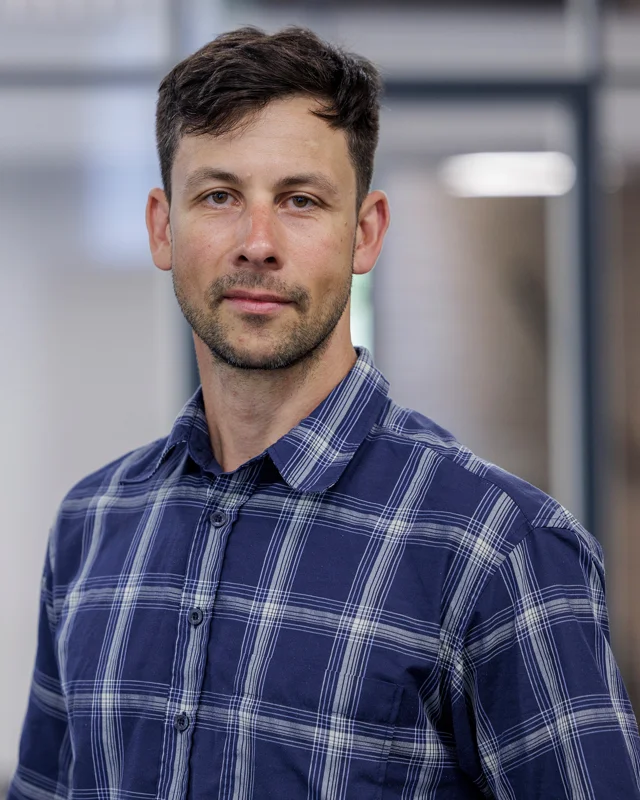
Michael M. Bechtel
Professor, Political Science
Michael Bechtel is Professor of Political Economy, Chair of the Department of Political Science, and Director of the Political Economy Lab (PEL) at University of Cologne. His research explores how societies can address economic and environmental sustainability problems. Current projects analyze mass support for climate action, the politics of natural disasters, and policy responses to economic crises. Bechtel’s articles have appeared in journals such as American Journal of Political Science, American Political Science Review, Journal of Politics, International Organization, Nature Climate Change, Nature Communications, and Proceedings of the National Academy of Sciences.
Research Areas
Public Opinion and Survey Design
Developing tools to measure of mass preferences including qualitative AI surveys, behavioral items multidimensional policy design experiments.
Climate Policy
We study the drivers and effects of climate policy, climate cooperation, and the politics of environmental regulation.
Designing Public Policy and Institutions
How do public policy design and institutions affect individual attitudes and elections? Which trade-offs are voters willing to make when forming preferences over policy?
Politics and the Economy
What are the sources of political conflict over economic policy and responses to economic crises?
Featured Work
Recent Publications
Key finding: Fear and anxiety are strongly affected by the final policy outcome, relatively mildly by outbreak severity, and minimally by response type and rapidity.
In the media:Journal of Experimental Political Science Blog
Key finding: Opposition to preparing for collective threats depends more on informational deficiencies than on personal experience with realized risks.